Wednesday, 20 March 2013

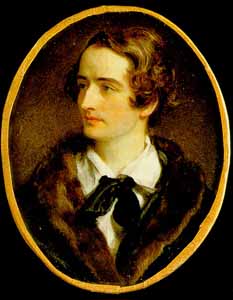
John Keats and his odes with Sensuousness


Romantic Literature.
Topic: ‘John Keats and his odes with Sensuousness’
Prepared by: Avani N. Dave
M.A. - SEM – 2
Roll No: 02
Date: 18/03/'13
Department of English
Maharaja Krishnakumar Sinhji
Bhavnagar University


·         Introduction: 
                           John Keats was one of the Trio-younger romantic poets v/s Shelley, Byron and himself. His odes are the most touching. He blossomed early and died young. Keats is noted for the indulging luxuriance of his imagery, but at the same time, he developed self-discipline in both feelings and craftsmanship. Keats believed in the importance of Sensation, but for him, Sensation was the path of the knowledge of reality. All of his odes stand apart as the best of all with its Sensuousness and richness of imagination. It is the most perfect and shortest that is ‘Ode to autumn.’ Other he wrote ode on ‘Grecian Urn’, ‘Ode to Psyche’,And many like ode to a Nightingale, Ode on Melancholy, and many.


·         Sensuousness :
                         Sensuousness is the unparallel quality of Keats poetic genius. He is the poet of Sense and their delight, He gratified that the five human senses- touch, taste, smell, sight and hearing. He is also a great lover of beauty. His mingling of love with beauty is become universal with this line:

                     “A thing of Beauty is joy forever.”
                                     He shows his strikingness in his entire poetry. ‘The eve of st.Agnes'', the description of the Gothic window is famous for its strong sensuous appeal. Our sense of sight and smellare also gratified when the3 poet describe the wintry moon throwing its lights on Madeline’s fair breast and the rose-bloom falling on her hands. The short masterpiece, a Bella Dame Sans Meric, has its own sensuous appeal.

                                The Odes, which represent the great poetic achievement of Keats. The Ode to Psyche contains a lovely picture of Cupid and Psyche lying in an embrance in the deep grass, in the midst of flowers of various colours.

                                The odes, which represent the great sensuous picture like in Ode on Melancholy, Ode on Grecian Urn, Ode to Nightingale, Ode to Fancy, Ode to autumn also contain sensuous picture.

·         Keats, pre-eminently the poet of the senses.

                             Sensuousness is the paramount quality of Keats’s poetical genius. Keats is pre-eminently the poet of the senses and their delights. No one has catered to and gratified the five human senses to the same extent as Keats. He is a great lover of beauty in the concrete. His religion is the adoration of the beautiful. In this respect he is a follower of Spenser. “I have loved the principle of Beauty in all things”, he said. His Endymion begins with the famous line:

“A thing of beauty is a joy forever.”

·         Sensuous Imagery of the Great Odes :
                        The ode to psyche contains replete with sensuous pictures of lover cupid and psyche

“Mid hush’d, cool-rooted flowers, fragment-eyed.”

                            “Every beauty that flowers have scant form stillness, coolness the next colouring is summed up in the next” the lovers lie with lips that touch not but which have not at the same time bidden forever. We have more sensuous imagery when Keats describes the superior beauty of psyche as compared with Venus and Vesper. A little later in the poem we are given pictures of a forest, mountains, streams, birds, breezes and dryads lulled to sleep on the moss.
                             One of the most exquisitely sensuous pictures comes exquisitely sensuous picture comes at the end where we see a bright torch burning in the casement to make it possible for cupid to enter the temple in order to make love to psyche.  

A bright torch and a casement ope at night,           
                to let the warm Love in!

               In the Ode on Melancholy, again, we have several sensuous pictures. There is the rain failing from a cloud above and reviving the drooping flowers below and covering the green hill in an “April shroud”. There is the morning rose; there are the colours produced by the sunlight playing on wet sand; and there is the wealth of “globed peonies”. And then there is another exquisitely sensuous picture.
 Or if thy mistress some rich anger shows,
Imprison her soft hand, and let her rave,
And feed deep, deep upon her peerless eyes.
The Ode on a Grecian Urn contains a series of sensuous pictures—passionate men and gods chasing reluctant maidens, the flute-players playing their ecstatic music, the fair youth trying to kiss his beloved, the happy branches of the tree enjoying an everlasting spring, etc. The ecstasy of the passion of love and of youth is beautifully depicted in the following lines:

More happy love! more happy happy love!
For ever warm and still to be enjoyed,       
For ever panting, and for ever young.

The Ode to a Nightingale is one of the finest examples of Keats’s rich sensuousness. The lines in which the poet expresses of passionate desire for some Provencal wine or the red wine from the fountain of the Muses appeal to both our senses of smell and taste:

        O, for a draught of vintage! that hath been
                Cool’d a long age in the deep-delved earth,
                Tasting of Flora and the country green,   
                Dance, and Provencal song, and sunburnt mirth! 
                O for a beaker full of the warm South,       
                Full of the true, the blushful Hippocrene…….

These lines bring before us a delightful picture of Provence with its fun and frolic, merry-making, drinking and dancing. Similarly the beaker full of the sparkling, blushful Hippocrene is highly pleasing. Then there is the magnificent picture of the moon shining in the sky and surrounded by stars. The rich feast of flowers described in the stanza that follows is one of the outstanding beauties of the poem. Flowers, soft incense, the fruit trees, the white hawthorn, the eglantine, the fast-fading violets, the coming musk-rose—all this is a delight for our senses.

In the Ode to Autumn, the charm of the season has been described with all its sensuous appeal. The whole landscape is made to appear fresh and scented. There is great concentration in each line of the opening stanza. There is a rich texture of sensuous awareness in the poem and the poet surrenders himself to the mood of the sense.

Season of mists and mellow fruitfulness,
Close bosom friend of the maturing sun.

 Each line is like the branch of a fruit tree laden with fruit to the breaking point. The scenery, the fruits and flowers and the honey all these appeal to our senses of seeing and the gourds. The hazels with their kernel, the bees suggesting honey all these appeal for our sense of taste and smell.

Sensuality Rather Than Sensuousness in Some of the Poems

              Thus, Keats always selects the objects of his description and imagery with a keen eye on their sensuous appeal. This sensuousness is the principal charm of his poetry. Sometimes this sensuousness deteriorates into sensuality. In other words, Keats often shows a tendency to dwell too much upon the charms of the feminine body and refers to the lips, checks, and breasts a little more than is necessary. In Ode to Autumn, the traditional form of address is maintained and the whole ode celebrates the beauty of nature through excellent images. ‘The pictorial quality of the ode is unequalled stop ford. Its beauty and its the consolation of the beauty is of the soul
Keats’ conception of beauty was not merely abstract but beauty personified its the objects of nature. He compares a eulogy of the season autumn with all its peculiar colour, smells, sounds and the tastes. The sensuousness of the poem depends on the minuteness of detail. Keats compares autumn to a gleaner and says,

And sometimes like a gleaner thou dust keep
Steady thy laden head across a brook.

It is his sense impressions that kindled his imagination which makes him realize the great principle that

‘Beauty is truth, truth is beauty.’

Conclusion:

Keats is more poet of sensuousness than a poet of contemplation. It is his senses which revealed him the beauty of things, the beauty of universe from the stars of the sky to the flowers of the wood. Keats’ pictorial senses are not vague or suggestive but made definite with the wealth of artistic details. Every stanza, Every line is full with sensuous beauty. No other poet except Shakespeare could show such a mastery of language and felicity of sensuousness .    

Cultural Studies - It's Origin and Concept


Paper: Cultural Studies
Topic:
Cultural Studies – Its origin and Concept
Prepared by: Avani N. Dave
M.A. - SEM – 2

Roll No: 02
Date: 18/03/'13

Department of English
Maharaja Krishnakumar Sinhji
Bhavnagar University


Cultural Studies

           Cultural  studies is an academic field of critical theory and Literary Criticism initially introduced by British academics in 1964 and subsequently adopted by allied academics throughout the world. Characteristically interdisciplinary, cultural studies is an academic discipline aiding cultural researchers who theorize about the forces from which the whole of humankind construct their daily lives. Cultural Studies is not a unified theory, but a diverse field of study encompassing many different approaches, methods and academic perspectives. Distinct from the breadth, objective and methodology of cultural anthropology and ethnic studies, cultural studies is focused upon the political dynamics of contemporary culture and its historical foundations, conflicts and defining traits. Researchers concentrate on how a particular medium or message relates to ideology, social class, nationality ethnicity, sexuality and/or gender, rather than providing an encyclopedic identification, categorization or definition of a particular culture or area of the world.
                                         Cultural studies combines feminist theory, social theory, political theory, history, literary theory, media theory, film/video studies, communication studies, political studies, economy   , translation studies, museum studies to study cultural phenomena in various societies. Thus, cultural studies seek to understand how meaning is generated, disseminated, and produced from the social, political and economic spheres within a given culture. The influential theories of cultural hegemony and agency have emerged from the cultural studies movement as well as the most recent communications theory, which attempts to explain the cultural forces behind globalization. Unique academic approaches to cultural studies have also emerged in the United States, Canada, Australia, South Africa and Italy.
                                            During the 1980s rise of neo-liberalism in Britain and the new conservatism  in America, cultural studies was beset with criticism from both outside political and inside academic forces, due to the close alliance between many cultural studies scholars and Marxist theory, left-wing politics and perceived "triumphalism" by other established scholars. Opposition to cultural studies was most dramatically demonstrated with the 2002 closing of the Centre for Contemporary Cultural Studies (CCCS) at the University of Birmingham, UK. CCCS was considered the founding academic program for cultural studies in the world, and was closed due to the result of the Research Assessment Exercise of 2001, a holdover initiative of the Margaret Thatcher led UK Government of 1986, that determined research funding for university programs. While many 21st century opponents continue to view the discipline as "irrelevant," the field has a world-wide presence consisting of numerous annual international conferences, academic programs, publications, students and practitioners, from Taiwan to Amsterdam and from Bangalore to Santa Cruz

Origins
                   The growth of cultural studies is linked to the rise in interest in popular culture in western societies in the 1960s. more leisure time wide spread television viewing music and other cultural status especially among the youth brought popular culture to the for fount of cultural    scrutiny within the academy cultural anthropologist, sociologist and historians were beginning to express greater interest in social history. Especially those of the subordinated groups such as women. African, Americans and the colonized. The work of the Birmingham school of [BCCS, see below] focused on,
·       Working class and dissident youth populations
(Willis 1978, hall and Jefferson 1976, )
·       Television personalities
·       Audiences ( Morley, 1980 )
                     The tone of this early version of cultural studies was set by student of the British new left. Especially Richard haggard and Raymond Williams both of whom had working class backgrounds such student with working class backgrounds carried their own cultures into their interpretation and found that their culture had no role in the literary studies programs at oxford or Cambridge. The emphasis on high culture ( the elite ) meant a creation, alienation for  these students.
                         Further (in Britain) labor union feminist and anti racist movements continued the 1970s. there was some nostalgia for the student radicalism of the 1960s which had thrown up a range of new movements, and cultural identities. Gay, race based feminist, and so on. The aim was to politicize specific identities but such radicalism had no academic attention anymore. The quest thus concretized into a study of youth subculture as the site of a new political future. Culture, especially popular culture, became the scene of struggle. Cultural studies sought, in the tradition of subculture studies and the movements of the 1960s and 70s, to detect and theorized ‘agency’ among these ‘identities (gay, woman and others)

Birmingham centre for contemporary cultural studies and Stuart hall.
                        The work of Raymond Williams influenced the projects and approaches of the BCCS in the 1970s. The approaches of the was clearly Marxist, and it adapted theoretical insights from post structuralism to develop cultural studies. The early approaches took the debate in the direction of textuality, were ‘culture’ , ‘identity’ and even the nation  were seen as texts and narratives.
                        Between 1982 and 1987 the open university (U.K.) offered a one-year interdisciplinary course, u203. This u203 was a course on ‘popular culture’. More than 5000 students took the course until it was terminated in 1987. The course was directed by Tony Bennett and evaluated by Terry Eagleton, Raymond Williams and others.
                      The course stated aim was to ‘interrogate critically the part that popular culture plays within your life’ (Qtd: in East hope 1991:74) ‘the distinction plays within your life’. Between ‘high’ and ‘ low’ culture was untenable, and one needed to see this evaluative judgment as driven by the need to obtained and retain power by the dominant classes. Stuart Hall’s 1980 essay, cultural studies: two paradigms’ (represented in the course reader culture, ideology and social process, 1981) set the tone for the interrogation of the above constitutive and culturally expressive subjects and expression are both determined by structures of social signification. This structure is ‘ hegemony’: the ideological structure that enables the dominant classes to legitimize, naturalize and retain power with this u203’s emphasis on the culture power link emerges clearly, an emphasis that has been retained in the cultural studies approaches even today.

                          Stuart Hall’s work has been a trendsetter in cultural studies and inaugurated in the field in Britain. Hall’s early essay, ‘Encoding/Decoding’ (first published in 1973) set the scene for cultural studies of the media (his work on ideology, cultural identity and others are discussed in subsequent chapters.) The essay argued that meanings within texts, songs, paintings, television soaps are organized through the operation of certain ‘codes’. Hall argues that the apparatuses, relations and practices of production appear as symbolic vehicles within language.


 Concept of Cultural Studies :
       

                        The word “culture” itself is so difficult to pin down, “Cultural studies” is hard to define. As was also the case in chapter 8 with Elaine Showalter’s “Culture” model of feminine difference, “cultural studies” is not so much a discrete approach at all but rather a set of practices. As Patrick Bran linger has pointed out, cultural studies is not “a tightly coherent, unified movement with a fixed agenda”, but a “loosely Coherent, unified movement with a fixed agenda.” But a “loosely coherent group of tendencies, issues, and questions.” That is also study of human culture race for example, drawing from Roland Barthes on the nature of literary language and Claude Levi-Strauss on anthropology cultural studies was influenced by structuralism and post structuralism.
                     
                    
                         The discipline of psychology has also entered the field of cultural studies. For example, Jacques Lucan’s psychoanalytic the theory of the unconscious structured as a language promoted emphasis upon language and power as symbolic systems. From Michel Foucault came the notion that power is a whole complex of forces; it is that which produces what happens. A tyrannical aristocrat does not   just independently wield power but is empowered by “discourses” – accepted ways of thinking, writing and speaking, and practices that embody exercise, and amount to power from punishment to sexual mores, Foucault’s “genealogy” of topics includes many things excluded by traditional blueprints for prisons to memoirs of “deviants” , “ psychoanalytic, structuralist and post-structuralist approaches are treated elsewhere in this handbook ; in the present chapter, we review ‘cultural studies’ connections with Marxism, the new historicism, multiculturalism, post modernism, popular culture, and post colonial studies before moving on the group of six literary works.

·       Why study Cultural study?
There are four goals of cultural studies
1.  Inter discipline
2.  Politically engaged
3.  High and low culture
4.  Means of production

·       Conclusion:
       
Thus, cultural studies is a new concept of literary criticism. It defines the literary criticism on the base of culture. Generally everything of literature affects and is affected by culture. So cultural studies is the study of literature keeping the cultural aspects in focus.